In short
- Indians need a proper visa, applied for in advance. There's no K-ETA or e-visa for us.
- Download Naver Map before you land. Google Maps can't do walking directions in Korea.
- Kimchi and most broths contain fish. Temple food is the safest veg meal in the country.
- Cards work almost everywhere, but carry some cash for markets and street food.
- Give Busan at least two days. The KTX from Seoul takes about two and a half hours.
Korea is the trip I've watched change people's minds the fastest. Most people come for the K-dramas, the skincare and the food they've seen on reels. They leave talking about how easy, safe and ridiculously fun it was, and how much they want to go back.
It does have a few quirks that catch Indian travellers off guard, though, starting before you've even packed. Here's everything I'd want a friend to know, from the visa to the last night out in Busan.
The visa: no shortcuts for us
A lot of countries can fly to Korea on a quick online K-ETA. Indian passport holders can't. We need a regular tourist visa, applied for in advance through the Korea Visa Application Centre or one of the visa centres in Indian cities. There's no visa on arrival and no e-visa.
- Apply three to four weeks before you fly. Processing usually takes one to two weeks, and longer in busy months.
- Have your documents in order: a passport valid for six months, photos on a white background, recent bank statements, your ITR or a letter from work, and your flight and hotel bookings.
- The one exception is Jeju. Indians can visit Jeju island visa-free for up to 30 days, but only on a direct flight to Jeju. Fly via Seoul and you need the visa.
Download these apps before you land
This is the single most useful thing in this post. Google Maps doesn't give walking or driving directions in Korea, because of local rules on map data. It'll show you a dot. It won't get you there.
- Naver Map. Your main app. Walking, bus and subway directions in English, right down to which exit to take and which carriage is closest to it.
- KakaoMap and Kakao T. A good backup map, and Kakao T is how you'll book taxis.
- Papago. Korea's own translator. It's noticeably better at Korean than Google Translate, and the camera mode reads menus and labels.
Sort out data before you fly, too. An eSIM or a local SIM picked up at the airport is easiest, and you'll want it the moment you need a map. Free wifi is everywhere in the cities, but you can't rely on it on the street.
Money: cards, cash and WOWPASS
Korea is one of the most card-friendly countries I've travelled in. Cafés, shops, convenience stores and most restaurants take cards without a second thought.
- Carry some cash anyway for street food stalls, traditional markets and the odd small restaurant. Banks and convenience-store ATMs marked "Global" take international cards.
- A WOWPASS card is popular with visitors. It's a prepaid card you buy and top up at machines around Seoul with your passport, and some versions double as a transport card. Note that the transport balance is topped up separately, with won.
- For the metro and buses, a plain T-money card from any convenience store does the job. Top it up with cash, tap in and out, and it works in most taxis too.
- Tipping isn't a thing. Nobody expects it, anywhere.
Eating veg in Korea
I'll be honest: Korea is harder than Japan for vegetarians, and much harder for Jain travellers. The trap is that so much of the cooking starts with seafood.
- Kimchi is usually made with fish sauce or salted seafood, called jeotgal. That includes the little dishes of kimchi that come free with every meal.
- Broths and stews often start with dried anchovy stock. Doenjang jjigae, the soybean paste stew that sounds vegetarian, usually does.
- Kimbap often hides fish cake or crab stick. Ask for yachae kimbap, the vegetable one, and check what's inside.
- Korean barbecue is the national pastime, and there's very little in it for vegetarians beyond the rice and side dishes.
Two phrases help. "Gogi, saengseon, jeotgal da ppae juseyo" asks them to leave out meat, fish and salted seafood. "Myeolchi eopsi" means no anchovy.
Your safest bet is temple food, the Buddhist cooking that has no meat or fish at all. In Seoul, Balwoo Gongyang inside Jogyesa temple and Sanchon in Insadong both serve set temple meals, and they're an experience in themselves. Kongguksu, cold noodles in a soybean broth, is usually vegetarian too, and you'll find Indian restaurants in Itaewon when you need dal and roti.
The convenience stores, CU, GS25 and 7-Eleven, are also a lifeline. Every one has a hot water machine for instant noodles, plenty of snacks, fruit, and a counter to eat at. Just read the labels, because instant noodles here are usually beef or seafood flavoured.
A day in Seoul, done right
| When | Where |
|---|---|
| 9am | Gyeongbokgung Palace, before the tour buses. Rent a hanbok at a shop by the gate (roughly ₩15,000 to ₩25,000 for two hours) and you get in free. It's closed on Tuesdays. |
| Late morning | Bukchon Hanok Village next door, a hillside of traditional houses. People live here, so keep your voice down. |
| Lunch | Insadong, for temple food at Sanchon or a wander through the tea houses and craft shops. |
| Afternoon | Seongsu, old factories turned into cafés, concept stores and pop-ups. Daelim Changgo, a café inside a huge warehouse, is the classic. Seoul Forest is next door. |
| Evening | Myeongdong for skincare shopping, then the Han River at sunset with convenience-store snacks, which is a very Seoul thing to do. |
| Night | Hongdae. Buskers and dance crews from around 6 to 10pm, then the clubs fill up after 11 and run until 4am. |
Shopping, and the tax refund
Come with space in your bag. Korea is the best place in the world to shop for skincare, and the prices will ruin you for buying it at home.
- Olive Young is the one everybody knows. Big branches in Myeongdong and Hongdae have everything, and many big stores can take the tax off on the spot when you show your passport and spend over the minimum. Keep your passport on you when you shop.
- Daiso for cheap, clever everything. You will buy things you didn't know you needed.
- Underground shopping centres at stations like Gangnam and Express Bus Terminal, for clothes and accessories at very good prices.
Nights out
Seoul goes out late and stays out late.
- Hongdae is young, loud and full of students. Live music, cheap drinks and the easiest place to have a great night on a budget.
- Itaewon has the most international crowd and the best mix of bars. Good for a proper night out.
- Gangnam is the polished, expensive option, with the big clubs.
Big clubs charge roughly ₩20,000 to ₩50,000 to get in, while most bars are free. Carry your passport, because ID checks are normal and a photo on your phone won't do.
Don't skip Busan
Seoul gets most of the attention, but Busan is where a lot of people quietly fall in love with Korea. The KTX fast train gets you there from Seoul in about two and a half hours, and it's a comfortable, easy ride.
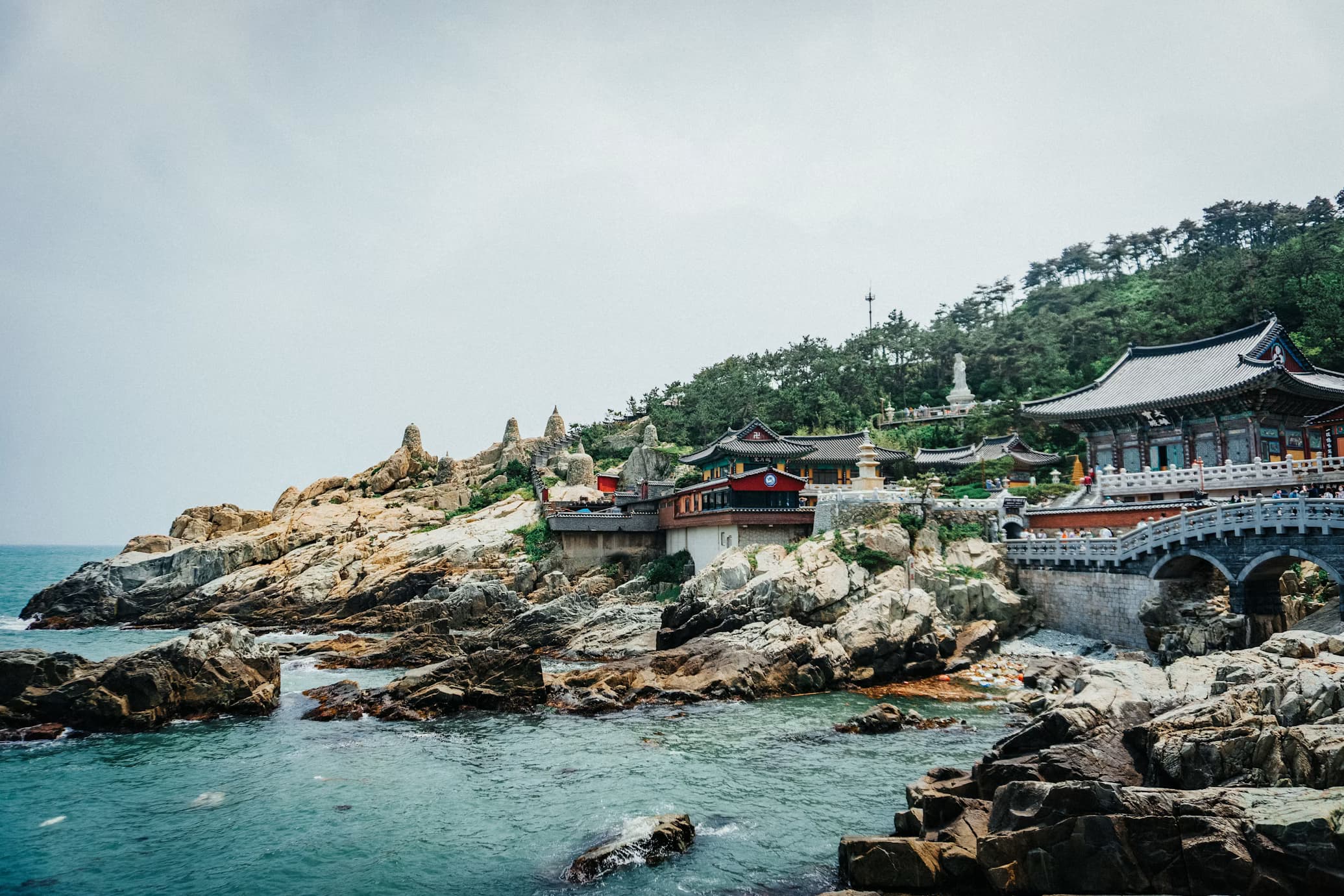
- Haedong Yonggungsa, a temple built right on the rocks above the sea. Go early for the light and the quiet.
- Gamcheon Culture Village, a hillside of brightly painted houses, murals and tiny cafés. Wear proper shoes, it's all steps.
- Haeundae and Gwangalli beaches, both inside the city. Go to Gwangalli after dark, when the bridge lights up over the water.
- Jagalchi Market, Korea's biggest fish market. Even if you don't eat fish, the scale of it is worth seeing.
A few things locals will notice
- Keep it quiet on the metro. Phone calls and loud groups get looks. The seats at the end of each carriage are for elderly passengers, so leave them free.
- Use both hands when you hand over or receive money or a card from someone older. It's a small thing people really appreciate.
- Don't stick your chopsticks upright in a bowl of rice. It's associated with funerals.
- Recycling is serious. Bins are split by type, so take a second to sort your rubbish.
When to go, and what to pack
Spring and autumn are the best times. Our Korea trip runs from late October into early November, when the days are crisp and sunny at around 10 to 20°C, the evenings are properly cold, and the trees are turning red and gold. Pack layers, a warm jacket for the nights, and the most comfortable shoes you own. You'll walk a lot.
Korea rewards a little preparation more than almost anywhere. Sort the visa early, download Naver Map, carry your passport everywhere, and leave space in your bag. Then just enjoy how easy it all is.

Griva Jain
Founder, Brew Your Experiences
Griva started Brew by planning trips for friends, and still plans every route herself. She's usually the one on the group WhatsApp at 2am sorting out tomorrow.
Prefer your own dates? Plan a custom trip with us